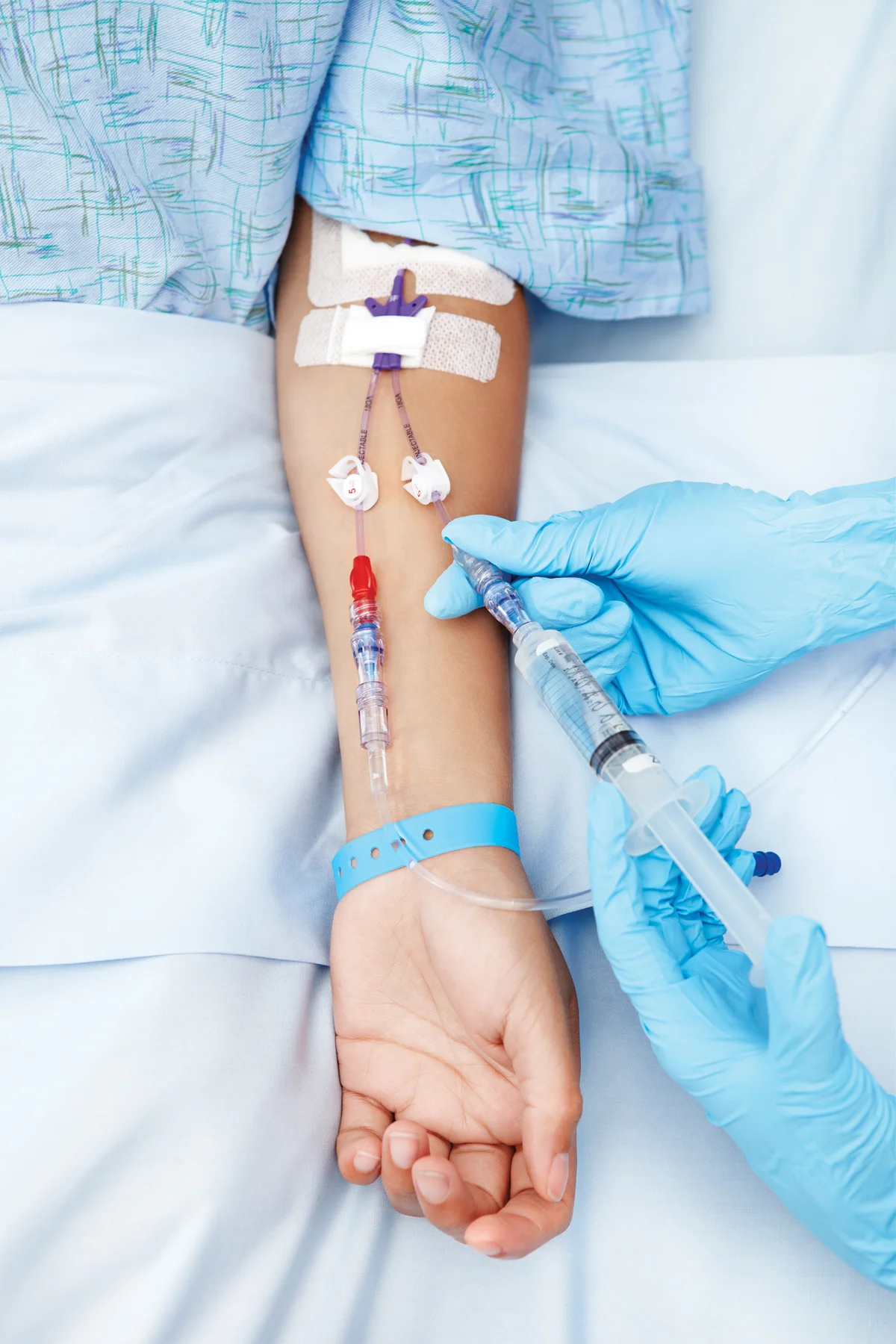
IV drip bag delivering fluids and nutrients intravenously. Source: Wikimedia Commons
You're Not Alone: Needle Anxiety Is Common
Let's start with something that might surprise you: approximately 1 in 4 Americans has some level of needle anxiety, also called trypanophobia. If you're reading this because you're nervous about getting IV therapy for the first time, you're in good company - and your feelings are completely valid.
I've been an IV therapy nurse for over 10 years, and I can tell you that the anticipation is almost always worse than the actual experience. In fact, the most common thing first-time patients say afterward is: "That's it? That wasn't nearly as bad as I thought!"
This guide is written specifically for nervous first-timers. I'm going to give you honest, straightforward information about what to expect - no sugarcoating, but also no exaggeration. Knowledge is power, and understanding exactly what will happen can dramatically reduce anxiety.
Quick Reassurance for the Very Anxious:
- The needle only touches you for 1-2 seconds total
- The needle does NOT stay in your arm - it's removed immediately
- You can tell the nurse to stop at any time
- Most patients rate the pain as 2/10 or less
- You're allowed to look away, bring a friend, or use headphones
- Our nurses insert IVs 10-15 times per day - they're experts
The Truth About IV Cannulas: It's Not What You Think
Here's the biggest misconception about IV therapy that causes unnecessary anxiety: the needle does NOT stay in your vein during treatment.
Let me explain what actually happens. The device used for IV therapy is called an IV cannula or IV catheter. It has two parts:
- The needle (stylet): A thin metal needle used ONLY for the initial insertion. It guides the plastic tube into your vein.
- The cannula (catheter): A tiny, flexible plastic tube that slides over the needle.
Here's the process in slow motion:
- The nurse inserts the needle with the plastic tube over it (1-2 seconds)
- Once the plastic tube is in your vein, the metal needle is immediately pulled out and thrown away
- Only the soft, flexible plastic tube remains in your vein for the treatment
- The IV fluid flows through this tiny plastic tube - not through a needle
Why This Matters If You're Nervous:
When people say "I hate needles," what they usually mean is they don't like the feeling of something sharp in their body. The good news: after the first 1-2 seconds, there is nothing sharp in your body.
The plastic cannula is so soft and flexible that most patients forget it's there within minutes. You can bend your arm, move around, and use your phone without feeling it.
The cannula is typically 1-2 inches long and about as thick as a strand of angel hair pasta. Modern cannulas are made from biocompatible materials that feel smooth inside your vein - nothing like the sharp sensation of a needle.
Step-by-Step: What Actually Happens During Your Session
Let's walk through your entire IV therapy session so there are zero surprises. I'll tell you exactly what to expect at each stage.
Step 1: Arrival and Health Assessment (5-10 minutes)
Your nurse will start by asking about your medical history and current symptoms. This isn't just small talk - it's a crucial safety step. They'll ask about:
- Why you're seeking IV therapy (hangover, Bali belly, jet lag, etc.)
- Any medical conditions, especially heart or kidney issues
- Current medications and supplements
- Known allergies to medications or vitamins
- Previous experiences with IV therapy or blood draws
Pro tip: This is the perfect time to mention if you're nervous about needles. Say something like: "I'm a bit anxious about needles - can you talk me through what you're doing?" Good nurses will appreciate the heads-up and adjust their approach.
They'll also check your vital signs: blood pressure, pulse, and sometimes oxygen saturation. This takes about 2 minutes and helps ensure IV therapy is safe for you.
Step 2: Getting Comfortable and Selecting the Vein (2-3 minutes)
You'll sit in a comfortable chair or lie down on a bed. If you're prone to feeling faint, lying down is recommended - it's not a sign of weakness, it's just smart.
The nurse will examine both arms to find the best vein. They're looking for a vein that's:
- Straight and accessible
- Bouncy when pressed (indicates good blood flow)
- Away from joints (so you can move your arm comfortably)
- Large enough for the cannula size needed
The most common sites are the forearm or inside of the elbow. You can request a specific arm if you prefer (for example, if you're right-handed and want your left arm accessed so you can use your phone).
Step 3: The Actual Insertion (1-2 minutes total)
Here's where most of the anxiety centers, so let's break this down second by second:
Second-by-Second Timeline:
- 0:00 - Tourniquet applied: The nurse ties a band around your upper arm. It feels snug but not painful - like a blood pressure cuff.
- 0:15 - Site cleaned: Cold antiseptic wipe on your skin. Some patients find this the worst part (it's cold!).
- 0:30 - "Small pinch coming": The nurse warns you right before insertion. This is when to look away and take a deep breath.
- 0:32 - Insertion: You feel a quick pinch or sting, similar to a bee sting or sharp scratch. This lasts 1-2 seconds.
- 0:35 - Needle removed: The metal needle is pulled out immediately. You might not even notice this part.
- 0:45 - Cannula secured: The nurse tapes the plastic tube in place. You might feel gentle pressure but no pain.
- 1:00 - Tourniquet removed: The band comes off your arm. Relief!
- 1:15 - IV connected: The drip bag is attached to your cannula. You might feel coolness as fluid starts flowing.
Total time you actually feel the needle: 1-2 seconds. Total time for the entire insertion process: 60-90 seconds.
Step 4: During the Infusion (20 minutes)
Now comes the easy part - you literally just relax while the IV fluids flow. Here's what you can expect during this time:
- First 5 minutes: You might feel a cool sensation in your arm as the fluid enters your bloodstream. This is completely normal and actually reassuring - it means the IV is working. Some people describe it as refreshing.
- Taste changes: With certain vitamins (especially B-complex), you might notice a brief metallic or vitamin-like taste in your mouth. This happens because the vitamins reach your taste receptors quickly through your bloodstream. It fades within a few minutes.
- Movement: You can move your arm normally, though avoid excessive bending at the insertion site. You can use your phone, read, chat, or even nap.
- Monitoring: Your nurse will check on you every 10-15 minutes to ensure you're comfortable and the IV is flowing properly.
What to Do During the 20 Minutes:
- Listen to music, podcasts, or audiobooks with headphones
- Watch videos on your phone or tablet
- Read a book or magazine
- Chat with a friend if you brought someone along
- Respond to emails or messages
- Meditate or practice deep breathing
- Take a nap - many people do!
Step 5: Removal and Aftercare (2 minutes)
When the IV bag is empty, the nurse will:
- Turn off the IV flow
- Remove the tape holding the cannula
- Quickly slide the plastic cannula out of your vein (you'll barely feel this - most people say it feels like removing a bandage)
- Apply pressure with a cotton ball or gauze for 2-3 minutes
- Place a bandage over the site
The removal is genuinely painless. Because the cannula is flexible plastic (not a sharp needle), it slides out smoothly without any sting or pinch.
The Honest Truth About Pain and Discomfort
Let's address the elephant in the room: Yes, there is a moment of discomfort during IV insertion. But let me give you the honest assessment from thousands of first-time patients.
Pain Scale Reality Check
When we ask first-time patients to rate their pain on a scale of 0-10 (where 10 is the worst pain imaginable):
- 70% of patients rate it 1-2 out of 10
- 25% of patients rate it 3-4 out of 10
- 5% of patients rate it 5 or higher (usually due to difficult vein access requiring multiple attempts)
To put this in perspective, most people rate these common experiences higher than IV insertion:
- Stubbing your toe: 6-7/10
- Getting your eyebrows waxed: 5-6/10
- Paper cut: 4-5/10
- Severe hangover headache: 7-8/10
- Bali belly cramps: 8-9/10
What It Actually Feels Like
Patients describe the insertion sensation in various ways:
- "Like a mosquito bite, but faster"
- "A sharp scratch that's over before you can really process it"
- "Similar to a vaccine shot, but briefer"
- "Like someone pinched me really quickly"
- "Uncomfortable for a second, then totally fine"
The key phrase you'll hear repeatedly: "It's over so fast." The anticipation lasts minutes; the actual sting lasts 1-2 seconds.
Pain Management Options
If you're particularly anxious about pain, you have options:
- Numbing cream: Can be applied 20 minutes before insertion (ask when booking)
- Ice pack: Applied for 1-2 minutes before insertion to numb the area naturally
- Smaller needle size: Pediatric-sized needles are available for very anxious patients
- Distraction techniques: Your nurse can talk you through it or have you focus on breathing
Still Nervous? Talk to Our Team First
We've helped hundreds of first-time patients with needle anxiety. Our nurses can answer your specific concerns and make accommodations to ensure you're comfortable.
8 Proven Tips for Needle-Nervous People
These strategies come from experienced IV nurses and from patients who've successfully managed their needle anxiety:
1. Tell Your Nurse You're Nervous
This is the single most important tip. Your nurse needs to know so they can:
- Explain each step before doing it (no surprises)
- Give you a countdown before insertion
- Use their most confident, efficient technique (less hesitation = less discomfort)
- Watch for signs of vasovagal response (fainting)
- Adjust their pace to your comfort level
There's zero judgment. Nurses see needle anxiety daily and they genuinely want to help you through it.
2. Look Away During Insertion
Many people find it easier if they don't watch. Turn your head, look at your phone, or focus on a spot on the wall. Some patients even close their eyes.
Visual input affects pain perception. Studies show that people who watch the needle report higher pain levels than those who look away, even though the physical sensation is identical.
3. Practice Deep Breathing
Before and during insertion, use this simple technique:
The 4-7-8 Breathing Technique:
- Breathe in through your nose for 4 counts
- Hold your breath for 7 counts
- Exhale slowly through your mouth for 8 counts
- Repeat 3-4 times
This activates your parasympathetic nervous system, which counteracts the fight-or-flight response. It's not just psychological - it genuinely reduces your body's stress response.
4. Bring Entertainment
Come prepared with:
- Headphones and a playlist or podcast you love
- A funny video or comedy special
- A gripping audiobook or show to binge
- Phone games that require concentration
Active distraction works better than passive. Choose content that requires your attention rather than something you can zone out from.
5. Request to Lie Down
Even if you don't think you'll faint, lying down has benefits:
- Eliminates the risk of fainting (can't fall if you're already horizontal)
- More comfortable for extended treatment
- Easier to relax your muscles
- Psychologically feels safer
About 3-5% of people experience vasovagal response (temporary drop in blood pressure causing dizziness or fainting). This isn't dangerous, but it's unpleasant. Lying down prevents it entirely.
6. Stay Hydrated Before Your Appointment
Drink 2-3 glasses of water in the hours before your IV therapy. Hydration makes your veins:
- More visible (easier for nurse to find)
- More plump and bouncy (easier to insert)
- Less likely to roll or collapse
Better veins = faster insertion = less time feeling uncomfortable. It's a simple step that makes a significant difference.
7. Bring a Support Person
Having a friend, partner, or family member with you can:
- Provide distraction through conversation
- Hold your other hand for emotional support
- Help you laugh and stay relaxed
- Drive you home if you feel lightheaded afterward
Just let the nurse know when booking so they can ensure there's seating for your companion.
8. Remember: It's Temporary and Optional
You have complete control. You can:
- Ask the nurse to stop at any point
- Request a break before proceeding
- Change your mind entirely (though we hope you won't!)
Knowing you're in control can paradoxically make you feel more comfortable proceeding. This isn't something being done to you - it's a service you're choosing for your wellbeing.
How to Prepare Before Your Session
Proper preparation can make your first IV therapy experience significantly smoother. Here's your pre-session checklist:
24 Hours Before
- Avoid blood thinners: If medically safe, skip aspirin, ibuprofen, or alcohol for 24 hours to minimize bruising risk
- Get good sleep: Fatigue can increase anxiety and make veins less cooperative
- Write down questions: Create a list of any concerns to discuss with your nurse
2-3 Hours Before
- Eat a light meal: Something with protein and complex carbs prevents lightheadedness. Good options: sandwich, yogurt with granola, smoothie with protein
- Avoid caffeine if you're anxious: Caffeine can increase jitters and anxiety
- Start hydrating: Begin drinking water (aim for 2-3 glasses total before arrival)
What to Wear
- Loose sleeves: Choose short sleeves or sleeves that roll up easily above your elbow
- Comfortable clothes: You'll be sitting or lying down for 20 minutes
- Layers: Some people feel cold during IV therapy, others feel warm - layers let you adjust
- Avoid tight arm clothing: Nothing that constricts your upper arm or forearm
What to Bring
- Phone or tablet with headphones
- Entertainment (podcast, music, book, games)
- List of current medications and supplements
- List of known allergies
- Water bottle for after treatment
- Light sweater or blanket if you tend to get cold
- Sunglasses if going back out into bright Bali sunshine
Questions to Ask Your Nurse
Don't hesitate to ask:
- "Can you explain what's in this IV formulation?"
- "What side effects should I watch for?"
- "How long will this take from start to finish?"
- "What if I need to use the bathroom during treatment?"
- "Can you use numbing cream or a smaller needle?"
- "What should I do if I feel dizzy or unwell?"
- "Will this interact with any of my medications?"
- "When will I start feeling the benefits?"
After Your Session: What to Expect
Most people feel noticeably better within 20-25 minutes of completing their IV therapy. Here's what to expect in the hours and days following treatment:
Immediate Effects (First 20 Minutes)
- Increased energy: Many people feel a surge of energy, especially with vitamin B12 and B-complex formulations
- Reduced nausea: If you had Bali belly or hangover nausea, relief is often immediate
- Improved hydration: You may notice clearer thinking and reduced headache
- Mild lightheadedness: Some people feel slightly dizzy when first standing up - this is normal and passes quickly
- Increased urination: Completely normal - your body is processing the fluids
First 24 Hours
- Peak effects: You'll likely feel your best 2-4 hours after treatment
- Possible bruising: Light bruising at the insertion site may appear (occurs in 10-15% of patients)
- Continued hydration: Your body continues absorbing and processing the fluids
- Better sleep: Many patients report improved sleep quality the night after treatment
Post-Treatment Care Instructions
Do's and Don'ts After IV Therapy:
DO:
- Keep the bandage on for 2-3 hours
- Drink plenty of water throughout the day
- Eat a nutritious meal within 1-2 hours
- Resume normal activities once you feel steady
- Apply ice if you notice swelling at the insertion site
DON'T:
- Do strenuous exercise for 2-3 hours
- Lift heavy weights with the treated arm for 24 hours
- Soak the insertion site in water (pools, ocean, baths) for 24 hours
- Drink alcohol for at least 4-6 hours (let your body rehydrate first)
- Take hot baths or saunas for 4-6 hours
When to Contact Your Provider
While serious complications are rare (less than 0.1%), contact your healthcare provider if you experience:
- Increasing pain, redness, or warmth at the insertion site after 24 hours
- Red streaks extending from the insertion site
- Fever or chills within 48 hours of treatment
- Significant swelling that worsens after the first day
- Allergic reaction symptoms (rash, itching, difficulty breathing)
These symptoms are extremely uncommon but it's important to know what to watch for.
When to Choose IV Therapy Over Other Options
You might be wondering: "Do I really need IV therapy, or would oral supplements work just as well?" Here's when IV therapy is genuinely the better choice:
IV Therapy Is Superior When:
- You need rapid relief: Hangover, severe dehydration, Bali belly - when you can't wait 2-4 hours for oral absorption
- You can't keep oral intake down: Severe nausea or vomiting makes oral hydration impossible
- You're severely dehydrated: Your digestive system isn't absorbing efficiently when dehydrated
- You want higher doses: Some vitamins (like vitamin C) can cause digestive upset in high oral doses but are well-tolerated IV
- You have digestive issues: Conditions like Bali belly impair nutrient absorption from your gut
- Maximum bioavailability matters: IV delivers 100% of nutrients to your bloodstream vs. 20-50% oral absorption
Oral Options Might Be Fine When:
- You have mild symptoms and time to recover
- You can drink fluids comfortably
- You're doing preventive supplementation (not treating acute issues)
- Cost is a major concern (oral is less expensive)
- You have severe needle phobia that outweighs the benefits
Real-World Scenarios
Choose IV Therapy For:
- Severe hangover and you have plans in 2-3 hours
- Bali belly with vomiting - can't keep oral hydration down
- Jet lag and you want to hit the ground running
- Food poisoning with severe dehydration
- Pre-event energy boost (wedding, performance, athletic event)
- Recovery from excessive sun exposure and heat exhaustion
Oral Supplements Work For:
- Mild hangover prevention the night before drinking
- General wellness and daily vitamin supplementation
- Gradual energy improvement over days
- Mild dehydration you can address with sports drinks
First-Timer Questions Answered
Here are the questions we hear most from nervous first-timers, answered honestly:
Does IV therapy hurt?
The initial needle insertion feels like a quick pinch or bee sting that lasts 1-2 seconds. After the needle is removed and only a tiny plastic tube remains in your vein, you typically feel nothing at all during the 20 minute infusion. Most patients report it's far less painful than they expected.
What if I'm afraid of needles?
Needle anxiety affects 1 in 4 Americans, so you're not alone. Tell your nurse about your fear - they can use smaller needles, apply numbing cream, let you lie down, and talk you through each step. Looking away during insertion, deep breathing, and bringing headphones for distraction all help significantly.
Does the needle stay in my arm the whole time?
No! This is the most common misconception. The metal needle is only used for the initial 1-2 second insertion, then it's immediately removed. What stays in your vein is a tiny, flexible plastic tube called a cannula - you can barely feel it and it moves with your arm naturally.
How long does the IV drip take?
Most IV therapy treatments take 20 minutes, depending on the formulation and your body's response. The insertion itself takes 1-2 minutes, then you simply relax while the fluids infuse. You can use your phone, read, or even nap during treatment.
Can I move my arm during the IV?
Yes, you can move your arm normally. The IV cannula is flexible and designed to move with you. You can adjust your position, use your phone, or reach for things. Just avoid excessive bending at the insertion site or pulling on the tubing.
What should I do before my first IV therapy session?
Drink plenty of water (2-3 glasses) in the hours before treatment - hydration makes veins easier to find. Eat a light meal 1-2 hours before to prevent lightheadedness. Wear loose, comfortable clothing with sleeves that roll up easily. Write down any questions or concerns to discuss with your nurse.
Will I feel the fluid going into my vein?
You may feel a slight cool sensation as the fluid enters your bloodstream, especially during the first few minutes. This is completely normal and actually reassuring - it means the IV is working properly. Some patients describe it as refreshing, while others don't notice it at all.
What if they can't find my vein?
Our nurses are trained specifically in difficult vein access. If your veins aren't immediately visible, they'll use techniques like warming your arm, having you make a fist, or applying a warm compress. In rare cases, they may use a different insertion site. Being well-hydrated before treatment makes veins much easier to access.
Can I bring someone with me for support?
Absolutely! Many first-time patients bring a friend or partner for emotional support. Having someone to talk with during the treatment can make time pass quickly and help distract from any anxiety. Just let us know when booking so we can ensure comfortable seating.
How will I feel immediately after IV therapy?
Most patients feel noticeably better within 20-25 minutes. You may experience increased energy, reduced nausea, or improved hydration almost immediately. Some people feel a bit lightheaded for 5-10 minutes after standing up - this is normal. Avoid strenuous exercise for 2-3 hours after treatment.
Will I have a bruise after the IV?
Light bruising at the insertion site occurs in about 10-15% of patients and is completely normal. It typically appears within 24 hours and resolves in 3-7 days. You can minimize bruising by applying pressure to the site for 2-3 minutes after removal and avoiding blood thinners before treatment.
Is IV therapy safe for first-timers?
Yes, IV therapy is very safe when administered by licensed medical professionals. We conduct a full health assessment before treatment, use sterile single-use equipment, and monitor you throughout the session. Serious complications are extremely rare (less than 0.1%) and our team is trained to handle any adverse reactions.
Ready to Book Your First Session?
You've read this entire guide, which means you're seriously considering IV therapy. That's great! Knowledge reduces anxiety, and you now know more about the process than 95% of first-time patients.
Here's what happens when you contact us:
- Tell us what you're dealing with (hangover, Bali belly, jet lag, etc.)
- Mention you're a first-timer and any concerns you have
- We'll recommend the best treatment for your situation
- Book a time that works for you (we're available 24/7)
- Our nurse arrives at your location with everything needed
Remember: You can ask questions at any point. You can request accommodations for anxiety. You're in control of your healthcare experience.
Book Your First IV Therapy Session
We've helped hundreds of nervous first-timers discover that IV therapy isn't scary - it's actually the fastest way to feel better. Our experienced nurses will make sure you're comfortable every step of the way.
Available 24/7 across all Bali. Average response time: 2 minutes. Average arrival time: 20-25 minutes.
Scientific References
[1] Hamilton, J. G. (1995). "Needle phobia: a neglected diagnosis." Journal of Family Practice, 41(2), 169-175. PubMed
[2] Gomez, C. R., et al. (2014). "Efficacy and safety of intravenous fluid therapy." British Journal of Nursing, 23(3), S16-S20. PubMed
[3] Wallis, L. A., et al. (2011). "Bioavailability and pharmacokinetics of intravenous versus oral route." Emergency Medicine Journal, 28(10), 842-846. PubMed
[4] Nicholson, J., et al. (2018). "Peripheral venous cannulation: pain, anxiety, and patient satisfaction." Journal of Infusion Nursing, 41(4), 237-244. PubMed
[5] Carr, P. J., et al. (2018). "Development of a clinical prediction rule to improve peripheral intravenous cannulae first insertion success." BMJ Open, 8(5), e019955. PubMed
[6] Helm, R. E., et al. (2015). "Accepted but unacceptable: peripheral IV catheter failure rates." Journal of Infusion Nursing, 38(3), 189-203. PubMed
Related Articles
IV Therapy Safety Guide
Learn about medical certifications, sterile protocols, and safety standards.
IV Therapy Cost Guide
Transparent pricing breakdown for all IV therapy treatments in Bali.
Hangover Recovery Guide
Science-based IV therapy solutions for fast hangover relief.
Medical Disclaimer
This article is for informational and educational purposes only and does not constitute medical advice. Individual experiences with IV therapy may vary. If you have specific medical conditions or concerns, consult with your healthcare provider before receiving IV therapy. Always seek the advice of your physician or other qualified health provider with any questions you may have regarding a medical condition.