What is Bali Belly?
Bali Belly is the colloquial term for traveler's diarrhea acquired specifically in Bali, Indonesia[1]. Medically, it falls under the broader classification of traveler's diarrhea (TD), defined as the passage of three or more unformed stools in 24 hours, often accompanied by at least one additional symptom such as abdominal cramps, nausea, vomiting, or fever[2].
According to the National Center for Biotechnology Information (NCBI), traveler's diarrhea is one of the most common health problems affecting international travelers[3]. The condition is typically self-limited, with 90% of cases resolving within one week without specific treatment[4].
Causes and Pathogens
Primary Bacterial Causes
The most common bacterial cause of Bali Belly is enterotoxigenic Escherichia coli (ETEC), with estimates that this bacteria is responsible for nearly 30% of traveler's diarrhea cases globally[5]. E. coli bacteria are often transmitted through contaminated food and water[6].

Escherichia coli bacteria under electron microscope (10,000x magnification). E. coli is the most common cause of traveler's diarrhea, responsible for approximately 30% of cases. Source: Wikimedia Commons
Other bacterial pathogens commonly implicated in Bali Belly include[7]:
- Campylobacter jejuni (10-15% of cases)
- Salmonella species (5-10% of cases)
- Shigella species (5-10% of cases)
Viral and Parasitic Causes
Viral pathogens, particularly norovirus and rotavirus, account for approximately 10-15% of traveler's diarrhea cases[8]. Parasitic infections, while less common (5-10% of cases), can include Giardia lamblia, Cryptosporidium, and Entamoeba histolytica[9].
Transmission Mechanisms
Traveler's diarrhea is most commonly spread by fecal-oral transmission of the causative organism, typically through consumption of contaminated food or water[10]. The main source of infection is food and water that has been contaminated by feces[11].
Epidemiology and Statistics
Traveler's diarrhea affects 30-70% of travelers depending on the destination and season of travel[12]. Bali, as a high-risk destination for traveler's diarrhea, has seen a documented increase in cases among international visitors[13].
Recent reports from Australian insurance companies indicate a surge in claims related to traveler's diarrhea in individuals returning from Bali, Indonesia[14]. This trend underscores the ongoing public health concern and the importance of preventive measures and appropriate treatment options.
Key Statistics:
Clinical Symptoms
The hallmark symptom of Bali Belly is diarrhea, defined as three or more loose or watery stools within 24 hours[15]. Additional symptoms commonly reported include:
- Gastrointestinal symptoms: Abdominal cramps, nausea, vomiting, bloating[16]
- Systemic symptoms: Fever, chills, malaise, loss of appetite[17]
- Dehydration signs: Dry mouth, decreased urination, dizziness, fatigue[18]
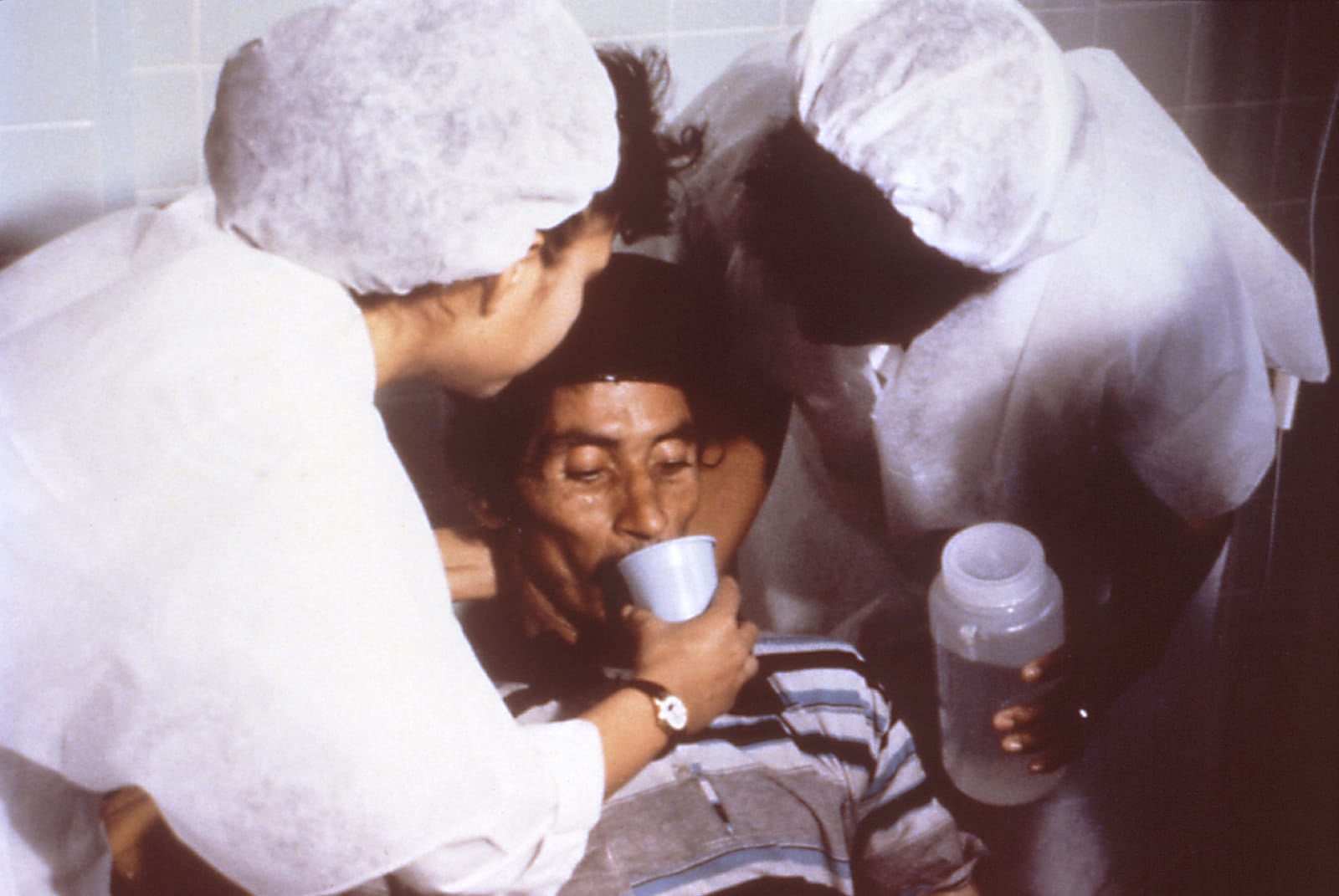
Medical staff administering rehydration therapy. Dehydration is one of the most serious complications of Bali Belly and requires prompt treatment to prevent severe outcomes. Source: Wikimedia Commons
Symptom onset typically occurs 6-48 hours after exposure to the pathogen, with most cases beginning within the first week of travel[19].
Diagnosis
Diagnosis of Bali Belly is primarily clinical, based on the characteristic symptom pattern and recent travel history[20]. Laboratory testing is generally not required for uncomplicated cases but may be indicated in specific circumstances[21]:
- Severe diarrhea lasting more than 3 days
- High fever (>38.5°C/101.3°F)
- Bloody or mucoid stools
- Signs of severe dehydration
- Immunocompromised patients
Treatment Options
The foundation of Bali Belly management is fluid repletion to prevent and treat dehydration[22]. Treatment strategies are typically stratified by severity:
Mild Cases
For mild traveler's diarrhea, increasing intake of clear fluids, loperamide, or bismuth subsalicylate may suffice[23]. Oral rehydration solutions (ORS) are preferred over plain water as they contain optimal concentrations of electrolytes and glucose[24].
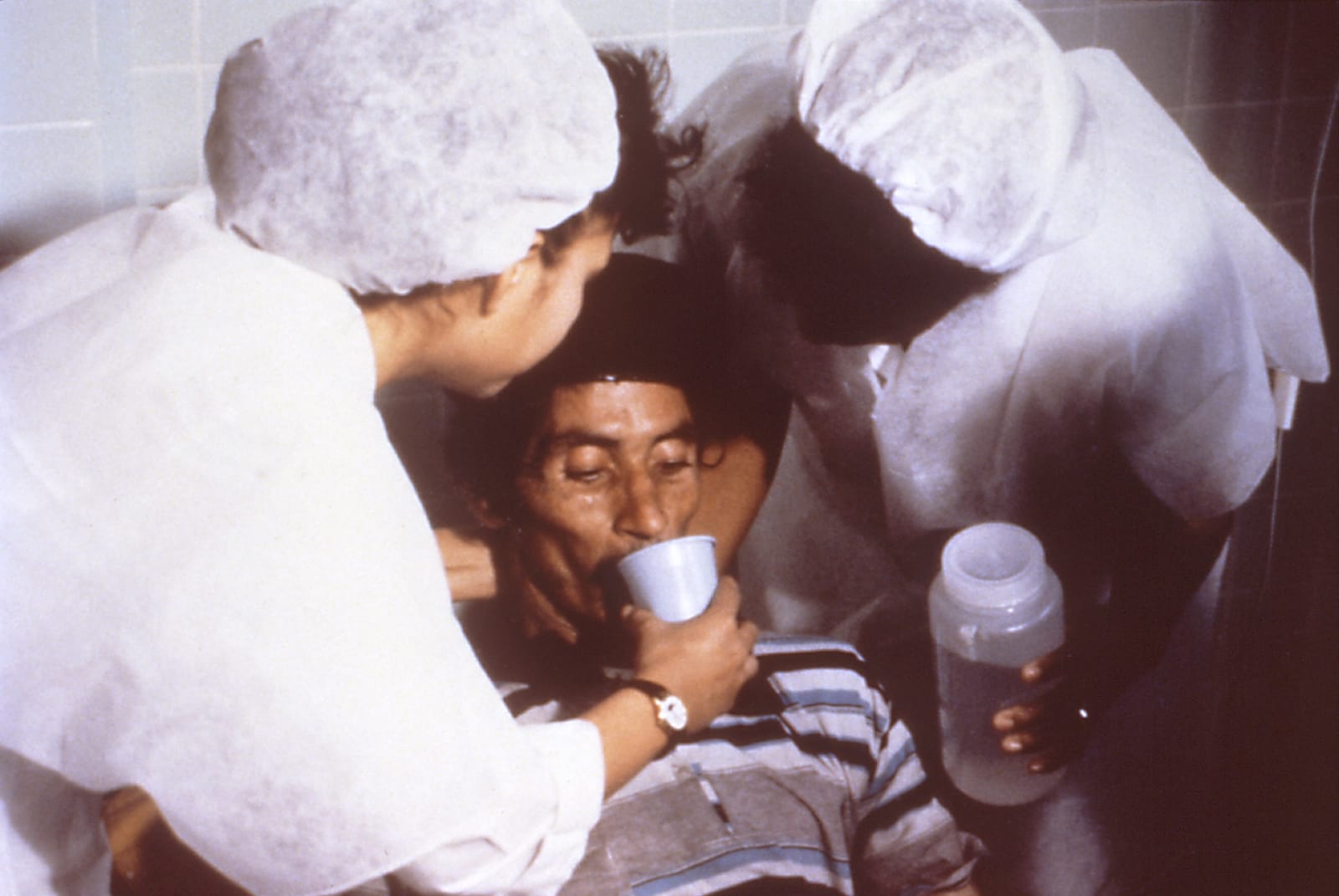
Oral rehydration therapy (ORT) being administered in a clinical setting. ORS contains optimal concentrations of electrolytes and glucose for effective rehydration in mild to moderate cases. Source: Wikimedia Commons
Moderate to Severe Cases
Strong evidence supports the effectiveness of antimicrobial therapy in most cases of moderate to severe traveler's diarrhea[25]. The Journal of Travel Medicine recommends fluoroquinolones or azithromycin as first-line antibiotic treatments[26].
IV Rehydration Therapy Effectiveness
Intravenous (IV) fluid therapy represents an effective intervention for moderate to severe dehydration associated with Bali Belly, particularly when oral rehydration is insufficient or not tolerated[27].

Intravenous (IV) therapy equipment in medical setting. IV rehydration delivers fluids and electrolytes directly into the bloodstream for rapid recovery from severe dehydration. Source: Wikimedia Commons
Clinical Evidence
A prospective cohort study from the USA evaluated rapid IV rehydration in children with gastroenteritis. Patients received 20-30 ml/kg isotonic crystalloid solution over 1-2 hours followed by oral rehydration. All patients improved after IV therapy and none required hospital admission after discharge[28].
An approach to intravenous rehydration developed over 20 years permits rehydration of severely ill patients in 2 to 3 hours and permits early refeeding[29]. This rapid rehydration protocol has been shown to be safe and effective in clinical settings.
When IV Therapy is Indicated
While oral rehydration remains the first-line therapy for most cases, IV fluids are indicated in specific situations[30]:
- Severe dehydration (>9% body weight loss)
- Persistent vomiting preventing oral intake
- Altered mental status
- Hemodynamic instability
- Failure of oral rehydration therapy
IV Solution Composition
The World Health Organization (WHO) recommends isotonic crystalloid solutions such as normal saline or Ringer's lactate for IV rehydration in severe diarrhea cases[31]. These solutions effectively restore fluid volume and electrolyte balance.
IV Therapy Benefits:
Prevention Strategies
Prevention of Bali Belly centers on minimizing exposure to contaminated food and water. Evidence-based prevention strategies include[35]:
Food and Water Safety
- Drink only bottled, boiled, or filtered water
- Avoid ice cubes made from tap water[36]
- Eat only thoroughly cooked, hot foods
- Avoid raw or undercooked meat and seafood
- Peel fruits and vegetables yourself
- Avoid food from street vendors[37]
Hand Hygiene
Proper hand hygiene is critical in preventing fecal-oral transmission. The CDC recommends washing hands with soap and water for at least 20 seconds, especially before eating and after using the bathroom[38]. When soap and water are unavailable, alcohol-based hand sanitizers containing at least 60% alcohol are an acceptable alternative[39].
When to Seek Medical Attention
While most cases of Bali Belly are self-limited, certain warning signs indicate the need for immediate medical evaluation[40]:
- Severe dehydration (dizziness, reduced urination, rapid heartbeat)
- Blood or mucus in stool
- High fever (>38.5°C/101.3°F)
- Severe abdominal pain
- Symptoms persisting beyond 3 days
- Signs of shock (confusion, cold extremities, rapid breathing)
⚠️ Emergency Situations:
If you experience severe symptoms such as difficulty breathing, chest pain, altered consciousness, or signs of severe dehydration, seek emergency medical care immediately or call emergency services (112 in Bali)[41].
Need Fast Relief from Bali Belly?
Our licensed medical team provides rapid IV rehydration therapy delivered directly to your location in Bali. Get professional treatment without leaving your hotel or villa.
References
[1] BIMC Hospital Bali. (2024). "Bali Belly — BIMC Hospital Bali." Retrieved from https://bimcbali.com/medical-news/bali-belly.html
[2] DuPont, H. L. (2019). "Travelers' Diarrhea: A Clinical Review." JAMA, 321(20), 2068-2069. PubMed PMID: 31084597.
[3] Connor, B. A., & Riddle, M. S. (2023). "Travelers Diarrhea." StatPearls. NCBI Bookshelf. Retrieved from https://www.ncbi.nlm.nih.gov/books/NBK459348/
[4] BIMC Hospital Bali. (2024). "Bali Belly: Traveller's Diarrhea." Retrieved from https://bimcbali.com/news-update/bali-belly-travellers-diarrhea.html
[5] Connor, B. A., & Riddle, M. S. (2023). "Travelers Diarrhea." StatPearls. NCBI Bookshelf.
[6] Unicare Clinic. (2024). "Common Diseases in Bali: 15 Health Risks You Need to Know." Retrieved from https://unicare-clinic.com/common-diseases-bali/
[7] Steffen, R., Hill, D. R., & DuPont, H. L. (2015). "Traveler's diarrhea: a clinical review." JAMA, 313(1), 71-80.
[8] Connor, B. A., & Riddle, M. S. (2023). "Travelers Diarrhea." StatPearls.
[9] Steffen, R., Hill, D. R., & DuPont, H. L. (2015). "Traveler's diarrhea: a clinical review." JAMA.
[10] Connor, B. A., & Riddle, M. S. (2023). "Travelers Diarrhea." StatPearls. NCBI Bookshelf.
[11] Better Health Channel. (2024). "Traveller's diarrhoea." Retrieved from https://www.betterhealth.vic.gov.au/health/conditionsandtreatments/travellers-diarrhoea
[12] Connor, B. A., & Riddle, M. S. (2023). "Travelers Diarrhea." StatPearls.
[13] Travel Doctor-TMVC. (2024). "Traveller's diarrhoea on the rise in Bali." Retrieved from https://traveldoctor.com.au/health-alerts/travellers-diarrhoea-rise-bali
[14] Travel Doctor-TMVC. (2024). "Traveller's diarrhoea on the rise in Bali."
[15] DuPont, H. L. (2019). "Travelers' Diarrhea: A Clinical Review." JAMA.
[16] Saline Bali. (2024). "Bali Belly Symptoms: 5 Treatment Options to Avoid Bali Belly." Retrieved from https://salinebali.com/bali-belly/symptoms/
[17] Connor, B. A., & Riddle, M. S. (2023). "Travelers Diarrhea." StatPearls.
[18] World Health Organization. (2024). "Diarrhoeal disease."
[19] Steffen, R., Hill, D. R., & DuPont, H. L. (2015). "Traveler's diarrhea: a clinical review." JAMA.
[20] Connor, B. A., & Riddle, M. S. (2023). "Travelers Diarrhea." StatPearls.
[21] Riddle, M. S., et al. (2017). "Guidelines for the prevention and treatment of travelers' diarrhea: a graded expert panel report." Journal of Travel Medicine, 24(suppl_1), S63-S80. Retrieved from https://academic.oup.com/jtm/article/24/suppl_1/S63/3782742
[22] Riddle, M. S., et al. (2017). "Guidelines for the prevention and treatment of travelers' diarrhea." Journal of Travel Medicine.
[23] Riddle, M. S., et al. (2017). "Guidelines for the prevention and treatment of travelers' diarrhea." Journal of Travel Medicine.
[24] World Health Organization. "Oral Rehydration Salts (ORS): a new reduced osmolarity formulation."
[25] Riddle, M. S., et al. (2017). "Guidelines for the prevention and treatment of travelers' diarrhea." Journal of Travel Medicine.
[26] Riddle, M. S., et al. (2017). "Guidelines for the prevention and treatment of travelers' diarrhea." Journal of Travel Medicine.
[27] NICE. (2009). "Fluid management - Diarrhoea and Vomiting Caused by Gastroenteritis." NCBI Bookshelf. Retrieved from https://www.ncbi.nlm.nih.gov/books/NBK63837/
[28] PubMed. (1992). "Rapid intravenous rehydration in acute diarrhea." PubMed PMID: 1449637. Retrieved from https://pubmed.ncbi.nlm.nih.gov/1449637/
[29] PubMed. (1992). "Rapid intravenous rehydration in acute diarrhea."
[30] NICE. (2009). "Fluid management - Diarrhoea and Vomiting Caused by Gastroenteritis." NCBI Bookshelf.
[31] World Health Organization. "The treatment of diarrhoea: A manual for physicians and other senior health workers."
[32] PubMed. (1992). "Rapid intravenous rehydration in acute diarrhea."
[33] NICE. (2009). "Fluid management - Diarrhoea and Vomiting Caused by Gastroenteritis."
[34] Santosham, M., et al. (2018). "The History of Intravenous and Oral Rehydration." Journal of Clinical Medicine. Retrieved from https://www.mdpi.com/2414-6366/7/3/50
[35] Centers for Disease Control and Prevention. "Travelers' Diarrhea." CDC Travelers' Health.
[36] BIMC Hospital Bali. (2024). "The Ways to Cope with Bali Belly Effectively." Retrieved from https://bimcbali.com/health-e-update/the-ways-to-cope-with-bali-belly-effectively-while-spending-time-in-bali.html
[37] Travel Online. (2024). "Bali Belly | How To Prevent & Manage Traveller's Diarrhoea." Retrieved from https://www.travelonline.com/bali/bali-belly
[38] Centers for Disease Control and Prevention. "Handwashing: Clean Hands Save Lives."
[39] Centers for Disease Control and Prevention. "Hand Sanitizer Use Out and About."
[40] Connor, B. A., & Riddle, M. S. (2023). "Travelers Diarrhea." StatPearls.
[41] BIMC Hospital Bali. (2024). "Emergency Services."
Related Articles
Dehydration in Tropical Climates
Understanding and preventing dehydration in Bali's climate.
Hangover Recovery Guide
Science-based IV therapy solutions for hangover relief.
Top 10 Wellness Tips for Bali
Expert tips to stay healthy during your vacation.
Medical Disclaimer
This article is for informational and educational purposes only and does not constitute medical advice. The information provided is based on published medical research and clinical guidelines but should not replace consultation with qualified healthcare professionals. Always seek the advice of your physician or other qualified health provider with any questions you may have regarding a medical condition. Never disregard professional medical advice or delay in seeking it because of something you have read in this article. Our licensed medical team at IV Drip Bali 24 provides personalized assessments and treatments based on individual patient needs.