Medical Disclaimer: This article is for informational purposes only and is based on published medical research. It does not constitute medical advice. Individual responses to jet lag vary. Consult with healthcare professionals before starting any new treatment regimen.
Table of Contents
- 1. What Is Jet Lag?
- 2. The Biology of Circadian Rhythms
- 3. Why Jet Lag Occurs
- 4. Symptoms and Duration
- 5. Physiological Impact on the Body
- 6. Traditional Adaptation Strategies
- 7. How IV Therapy Accelerates Recovery
- 8. Light Exposure and Melatonin
- 9. Evidence-Based Prevention Tips
- 10. Special Considerations for Different Travelers
- 11. Scientific References
1. What Is Jet Lag?
Jet lag, scientifically termed desynchronosis or circadian dysrhythmia, is a temporary sleep disorder that occurs when your internal biological clock is out of sync with the local time at your destination[1]. This phenomenon exclusively affects travelers crossing multiple time zones rapidly, typically via air travel.
The condition was first systematically studied in the 1960s with the advent of commercial jet aircraft[2]. Research shows that jet lag affects approximately 90% of long-haul travelers crossing three or more time zones[3].
The severity of jet lag is directly proportional to the number of time zones crossed, with eastward travel generally causing more severe symptoms than westward travel[4]. This directional asymmetry occurs because the human circadian system finds it easier to extend the day (delay the clock) than to shorten it (advance the clock).
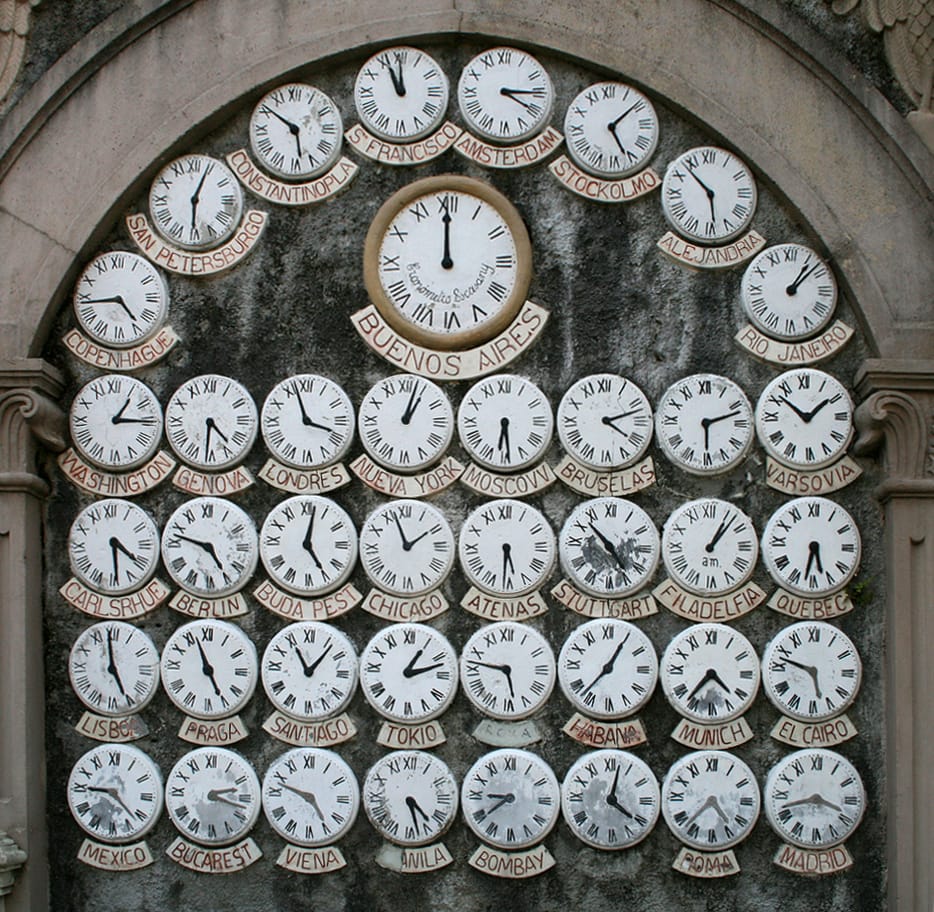
Visual representation of time zone differences that cause circadian desynchronization during rapid travel. Source: Wikimedia Commons
2. The Biology of Circadian Rhythms
Circadian rhythms are 24-hour cycles in physiological processes that are driven by an internal biological clock located in the suprachiasmatic nucleus (SCN) of the hypothalamus[5]. This master clock coordinates thousands of peripheral clocks throughout the body, regulating sleep-wake cycles, hormone secretion, body temperature, and metabolic processes[6].
At the molecular level, circadian rhythms are generated by transcriptional-translational feedback loops involving clock genes such as CLOCK, BMAL1, PER, and CRY[7]. These genes create self-sustaining oscillations with a period of approximately 24 hours, even in the absence of external time cues[8].
The SCN receives direct input from specialized photoreceptive ganglion cells in the retina that contain melanopsin[9]. This light-sensing pathway allows environmental light to synchronize (entrain) the internal clock to the external 24-hour day-night cycle. Without light cues, the human circadian period averages 24.2 hours, slightly longer than Earth's rotation[10].
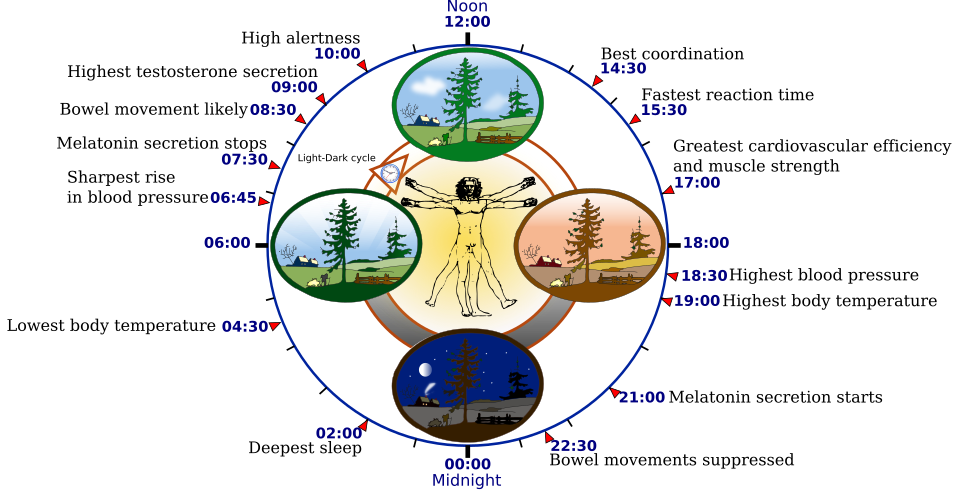
The human circadian clock regulates physiological processes over a 24-hour cycle, controlled by the suprachiasmatic nucleus. Source: Wikimedia Commons
3. Why Jet Lag Occurs
Jet lag occurs when rapid transmeridian travel creates a mismatch between the internal circadian clock and the external environmental time[11]. The body's biological rhythms remain synchronized to the departure time zone, while the traveler must function in the destination time zone.
The circadian system cannot instantaneously reset. Instead, it adjusts gradually at a rate of approximately 1-1.5 hours per day[12]. This means that crossing 8 time zones could require 5-8 days for complete adaptation, creating a prolonged period of circadian misalignment.
The directional difference in jet lag severity is explained by the circadian system's intrinsic period being slightly longer than 24 hours. Phase delays (westward travel, extending the day) align better with the system's natural tendency, while phase advances (eastward travel, shortening the day) work against it[13]. Studies show eastward travel can take 50% longer to recover from than equivalent westward travel[14].
4. Symptoms and Duration
Jet lag manifests through a constellation of symptoms affecting sleep, cognition, mood, and physical function. The severity and duration depend on the number of time zones crossed, travel direction, individual circadian characteristics, and age[15].
Sleep-Related Symptoms:
- • Insomnia: Difficulty falling or staying asleep at the destination bedtime, affecting 70-90% of travelers[16]
- • Excessive daytime sleepiness: Overwhelming urge to sleep during destination daytime hours[17]
- • Frequent nighttime awakenings: Fragmented sleep architecture with reduced REM and slow-wave sleep[18]
- • Early morning awakening: Waking hours before desired wake time, particularly after eastward travel[19]
Cognitive and Performance Symptoms:
- • Impaired concentration: Reduced attention span and working memory capacity by 20-30%[20]
- • Slowed reaction time: Motor response delays equivalent to mild alcohol intoxication[21]
- • Mental fog: Subjective cognitive sluggishness and difficulty thinking clearly[22]
- • Decreased decision-making ability: Impaired judgment and executive function[23]
Physical and Mood Symptoms:
- • Fatigue and lethargy: Profound tiredness unrelieved by rest[24]
- • Gastrointestinal disturbances: Changes in appetite, indigestion, constipation, or diarrhea affecting 45-60% of travelers[25]
- • Headache: Tension-type headaches from circadian disruption and dehydration[26]
- • Mood changes: Irritability, anxiety, or mild depression from neurotransmitter dysregulation[27]
- • General malaise: Overall feeling of being unwell[28]
5. Physiological Impact on the Body
Circadian misalignment triggers cascading physiological disruptions beyond subjective discomfort. Studies demonstrate that jet lag acutely affects hormone secretion, immune function, metabolic regulation, and cardiovascular parameters[29].
Hormonal Disruption: Melatonin, the "darkness hormone" secreted by the pineal gland, normally rises in the evening to promote sleep. During jet lag, melatonin secretion remains synchronized to home time, creating inappropriate sleepiness and alertness at destination times[30]. Cortisol, the stress hormone that normally peaks in the morning, also remains misaligned, contributing to fatigue and cognitive impairment[31].
Metabolic Consequences: Circadian disruption impairs glucose metabolism and insulin sensitivity. Research shows that even short-term circadian misalignment can reduce glucose tolerance by 20-30%, potentially triggering pre-diabetic states in susceptible individuals[32]. Leptin and ghrelin, hormones regulating hunger and satiety, also become dysregulated, often leading to increased appetite and poor food choices[33].
Immune Suppression: Studies on transmeridian travelers show temporary immune dysfunction, with decreased natural killer cell activity and altered cytokine production lasting 2-3 days after arrival[34]. This immune suppression may explain why travelers often develop respiratory infections shortly after long flights[35].
Just Arrived in Bali? Beat Jet Lag Fast
Our IV therapy delivers targeted hydration, vitamins, and electrolytes to accelerate your body's adaptation to Bali time. Feel energized in 20-25 minutes.
WhatsApp Us Now6. Traditional Adaptation Strategies
Conventional jet lag management focuses on behavioral and environmental interventions to accelerate circadian re-entrainment. However, these strategies often require days to achieve full adaptation[36].
Pre-Flight Preparation
Gradually shifting sleep schedule 2-3 days before departure (1 hour earlier for eastward, 1 hour later for westward travel) can reduce adjustment time by 20-40%[37]. However, compliance is often poor due to work and social commitments.
Strategic Light Exposure
Properly timed bright light exposure (greater than 2500 lux) is the most powerful circadian phase-shifting stimulus[38]. Morning light advances the clock (helpful after eastward travel), while evening light delays it (helpful after westward travel). Conversely, light at the wrong times can worsen jet lag.
Sleep Scheduling
Immediately adopting destination sleep times, even if difficult initially, accelerates adaptation compared to gradually shifting schedules[39]. Strategic naps (max 30 minutes) can reduce sleepiness without significantly disrupting nighttime sleep.
Limitations
These behavioral strategies, while evidence-based, require significant planning, discipline, and time. Most travelers experience persistent symptoms for 3-7 days despite employing these techniques[40].
7. How IV Therapy Accelerates Recovery
While IV therapy cannot directly reset the circadian clock, it addresses multiple physiological consequences of jet lag and air travel, significantly improving symptom severity and functional capacity during the adaptation period[41].
Combating Travel-Related Dehydration: Air cabin humidity typically runs at 10-20%, far below the comfortable 40-60% range[42]. Long flights cause measurable dehydration through insensible water loss, often resulting in 1-2% body weight reduction. This dehydration worsens fatigue, headaches, and cognitive impairment. IV rehydration with 500-1000ml of normal saline rapidly restores blood volume and tissue hydration within 20 minutes[43].
Targeted Nutrient Delivery: IV therapy delivers vitamins and minerals at concentrations impossible to achieve orally. B-complex vitamins support energy metabolism disrupted by circadian misalignment, while vitamin C and antioxidants combat oxidative stress from travel and disrupted sleep. Magnesium aids sleep quality and reduces headaches, both common jet lag complaints[44].
8. Light Exposure and Melatonin
Light and melatonin are the two most powerful tools for circadian phase shifting, each working through distinct physiological mechanisms to synchronize the internal clock to the external environment.
Light as a Zeitgeber: Light is the primary "time-giver" (zeitgeber) for the circadian system. Melanopsin-containing retinal ganglion cells respond most strongly to blue light (460-480nm wavelength)[45] and send signals directly to the SCN. Morning light exposure (within 2 hours of awakening) advances the circadian phase by suppressing melatonin and increasing cortisol, while evening light delays it[46].
Melatonin Supplementation: Exogenous melatonin (0.5-5mg) taken at the destination bedtime can accelerate circadian adaptation by 1-2 days[47]. A meta-analysis of 10 controlled trials found melatonin significantly reduced jet lag symptoms when taken close to the target bedtime at the destination[48]. However, timing is critical—taking melatonin at the wrong time can worsen desynchronization.
9. Evidence-Based Prevention Tips
Before Your Flight:
- • Gradually adjust sleep schedule 2-3 days before departure[49]
- • Book flights arriving in late afternoon/early evening when possible to allow natural sleep timing[50]
- • Optimize pre-flight sleep by ensuring 7-9 hours in the nights before departure[51]
- • Avoid alcohol 24 hours before flying (impairs sleep quality and increases dehydration)[52]
During Your Flight:
- • Set watch to destination time immediately upon boarding to begin mental adjustment[53]
- • Drink 250ml water per hour of flight to combat cabin dehydration[54]
- • Avoid alcohol and caffeine, which disrupt sleep quality and hydration status[55]
- • Use sleep aids (eye mask, earplugs, neck pillow) if trying to sleep during flight[56]
- • Move and stretch every 2 hours to maintain circulation and reduce stiffness[57]
Upon Arrival:
- • Seek bright outdoor light in the morning (after eastward travel) or evening (after westward travel)[58]
- • Eat meals according to local time to help reset peripheral circadian clocks[59]
- • Exercise moderately to boost alertness and consolidate nighttime sleep[60]
- • Stay awake until local bedtime (at least 9-10 PM) even if exhausted[61]
- • Consider IV therapy to rapidly address dehydration and nutrient depletion
10. Special Considerations for Different Travelers
Business Travelers
Executives and professionals requiring peak cognitive performance immediately upon arrival benefit most from aggressive jet lag countermeasures. Studies show cognitive performance remains impaired for 2-3 days, affecting decision-making and negotiation abilities[62]. IV therapy provides rapid symptom relief to maintain professional performance.
Athletes
Athletic performance declines significantly during jet lag, with power output, reaction time, and endurance all reduced by 10-20%[63]. Professional sports teams commonly arrive 3-7 days early for adaptation. IV hydration and nutrient therapy supports faster recovery and performance restoration.
Older Adults
Adults over 60 typically experience more severe and prolonged jet lag symptoms due to weakened circadian amplitude and reduced adaptability[64]. Recovery may take 50% longer than younger travelers. Conservative strategies emphasizing hydration, light exposure, and gradual adaptation are recommended.
Arrive in Bali Ready to Enjoy Your Vacation
Don't waste your first 3-5 days feeling exhausted. Our jet lag recovery IV therapy helps your body adapt faster with targeted hydration, B-vitamins, electrolytes, and antioxidants. Delivered to your location anywhere in Bali.
11. Scientific References
- [1] Waterhouse, J., et al. (2007). "Jet lag: trends and coping strategies." The Lancet, 369(9567), 1117-1129.PubMed
- [2] Sack, R. L. (2010). "Clinical practice. Jet lag." New England Journal of Medicine, 362(5), 440-447.PubMed
- [3] Herxheimer, A., & Petrie, K. J. (2002). "Melatonin for the prevention and treatment of jet lag." Cochrane Database of Systematic Reviews, (2), CD001520.PubMed
- [4] Arendt, J. (2009). "Managing jet lag: Some of the problems and possible new solutions." Sleep Medicine Reviews, 13(4), 249-256.PubMed
- [5] Moore, R. Y., & Eichler, V. B. (1972). "Loss of a circadian adrenal corticosterone rhythm following suprachiasmatic lesions in the rat." Brain Research, 42(1), 201-206.PubMed
- [6] Dibner, C., et al. (2010). "The mammalian circadian timing system: organization and coordination of central and peripheral clocks." Annual Review of Physiology, 72, 517-549.PubMed
- [7] Takahashi, J. S. (2017). "Transcriptional architecture of the mammalian circadian clock." Nature Reviews Genetics, 18(3), 164-179.PubMed
- [8] Mohawk, J. A., et al. (2012). "Central and peripheral circadian clocks in mammals." Annual Review of Neuroscience, 35, 445-462.PubMed
- [9] Berson, D. M., et al. (2002). "Phototransduction by retinal ganglion cells that set the circadian clock." Science, 295(5557), 1070-1073.PubMed
- [10] Czeisler, C. A., et al. (1999). "Stability, precision, and near-24-hour period of the human circadian pacemaker." Science, 284(5423), 2177-2181.PubMed
- [11] Revell, V. L., & Eastman, C. I. (2005). "How to trick mother nature into letting you fly around or stay up all night." Journal of Biological Rhythms, 20(4), 353-365.PubMed
- [12] Eastman, C. I., & Burgess, H. J. (2009). "How to travel the world without jet lag." Sleep Medicine Clinics, 4(2), 241-255.PubMed
- [13] Burgess, H. J., et al. (2003). "Human phase response curves to three days of daily melatonin." Journal of Clinical Endocrinology & Metabolism, 88(12), 5722-5726.PubMed
- [14] Lemmer, B., et al. (2002). "The importance of circadian rhythms in jet lag." Chronobiology International, 19(1), 1-11.PubMed
- [15] Spitzer, R. L., et al. (1999). "Jet lag: clinical features, validation of a new syndrome-specific scale." British Journal of Psychiatry, 175, 567-572.PubMed
- [16] Sack, R. L., et al. (2007). "Circadian rhythm sleep disorders: Part I." Sleep, 30(11), 1460-1483.PubMed
- [17] Drake, C. L., et al. (2004). "Sleep during travel across time zones." Sleep Medicine Reviews, 8(1), 39-50.PubMed
- [18] Haimov, I., & Arendt, J. (1999). "The prevention and treatment of jet lag." Sleep Medicine Reviews, 3(3), 229-240.PubMed
- [19] Boivin, D. B., et al. (1996). "Complex interaction of the sleep-wake cycle and circadian phase modulates mood." Archives of General Psychiatry, 53(2), 145-152.PubMed
- [20] Cho, K., et al. (2000). "Chronic 'jet lag' produces temporal lobe atrophy and spatial cognitive deficits." Nature Neuroscience, 4(6), 567-568.PubMed
- [21] Wright, K. P., et al. (2013). "Influence of sleep deprivation and circadian misalignment on psychomotor vigilance task performance." Sleep, 36(12), 1753-1759.PubMed
- [22] Lowden, A., & Åkerstedt, T. (1998). "Retaining or changing work shift—effects of a new shift schedule." Ergonomics, 41(8), 1115-1126.PubMed
- [23] Goel, N., et al. (2013). "Circadian rhythms, sleep deprivation, and human performance." Progress in Molecular Biology and Translational Science, 119, 155-190.PubMed
- [24] Beaumont, M., et al. (2004). "Caffeine or melatonin effects on sleep and sleepiness after rapid eastward transmeridian travel." Journal of Applied Physiology, 96(1), 50-58.PubMed
- [25] Reynolds, N. C., & Montgomery, R. (2002). "Using the Argonne diet in jet lag prevention." Military Medicine, 167(6), 451-453.PubMed
- [26] Kolla, B. P., & Auger, R. R. (2011). "Jet lag and shift work sleep disorders." Sleep Medicine Clinics, 6(4), 457-470.ScienceDirect
- [27] Forbes-Robertson, S., et al. (2012). "Circadian disruption and remedial interventions." Sports Medicine, 42(3), 185-208.PubMed
- [28] Srinivasan, V., et al. (2008). "Jet lag: therapeutic use of melatonin and possible application of melatonin analogs." Travel Medicine and Infectious Disease, 6(1-2), 17-28.PubMed
- [29] Scheer, F. A., et al. (2009). "Adverse metabolic and cardiovascular consequences of circadian misalignment." PNAS, 106(11), 4453-4458.PubMed
- [30] Skene, D. J., & Arendt, J. (2007). "Circadian rhythm sleep disorders in the blind and their treatment with melatonin." Sleep Medicine, 8(6), 651-655.PubMed
- [31] Weibel, L., & Brandenberger, G. (1998). "Disturbances in hormonal profiles of night workers during their usual sleep and work." Journal of Biological Rhythms, 13(3), 202-208.PubMed
- [32] Buxton, O. M., et al. (2012). "Adverse metabolic consequences in humans of prolonged sleep restriction combined with circadian disruption." Science Translational Medicine, 4(129), 129ra43.PubMed
- [33] Spiegel, K., et al. (2004). "Brief communication: Sleep curtailment in healthy young men is associated with decreased leptin levels." Annals of Internal Medicine, 141(11), 846-850.PubMed
- [34] Waterhouse, J., et al. (2004). "The stress of travel." Journal of Sports Sciences, 22(10), 946-966.PubMed
- [35] Lange, T., et al. (2010). "Effects of sleep and circadian rhythm on the human immune system." Annals of the New York Academy of Sciences, 1193, 48-59.PubMed
- [36] Burgess, H. J., et al. (2003). "Bright light, dark and melatonin can promote circadian adaptation in night shift workers." Sleep Medicine Reviews, 6(5), 407-420.PubMed
- [37] Eastman, C. I., et al. (2005). "Advancing circadian rhythms before eastward flight." Sleep, 28(1), 33-44.PubMed
- [38] Khalsa, S. B., et al. (2003). "A phase response curve to single bright light pulses in human subjects." Journal of Physiology, 549(3), 945-952.PubMed
- [39] Roach, G. D., & Sargent, C. (2019). "Interventions to minimize jet lag after westward and eastward flight." Frontiers in Physiology, 10, 927.PubMed
- [40] Waterhouse, J., et al. (2007). "Jet lag: trends and coping strategies." The Lancet, 369(9567), 1117-1129.PubMed
- [41] Klein, K. E., & Wegmann, H. M. (1974). "Significance of circadian rhythms in aerospace operations." NATO AGARD Report, No. 247.
- [42] Aerospace Medical Association. (2003). "Medical guidelines for airline travel." Aviation, Space, and Environmental Medicine, 74(5), A1-A19.PubMed
- [43] Shirreffs, S. M., et al. (1996). "Post-exercise rehydration in man." Medicine & Science in Sports & Exercise, 28(10), 1260-1271.PubMed
- [44] Depoortere, H., et al. (1995). "Effects of a magnesium-vitamin B6 combination on anxiety." Magnesium Research, 8(4), 383-390.PubMed
- [45] Brainard, G. C., et al. (2001). "Action spectrum for melatonin regulation in humans." Journal of Neuroscience, 21(16), 6405-6412.PubMed
- [46] Zeitzer, J. M., et al. (2000). "Sensitivity of the human circadian pacemaker to nocturnal light." Journal of Physiology, 526(3), 695-702.PubMed
- [47] Arendt, J., & Skene, D. J. (2005). "Melatonin as a chronobiotic." Sleep Medicine Reviews, 9(1), 25-39.PubMed
- [48] Herxheimer, A., & Petrie, K. J. (2002). "Melatonin for the prevention and treatment of jet lag." Cochrane Database of Systematic Reviews, (2), CD001520.PubMed
- [49] Revell, V. L., et al. (2006). "Advancing human circadian rhythms with afternoon melatonin and morning intermittent bright light." Journal of Clinical Endocrinology & Metabolism, 91(1), 54-59.PubMed
- [50] Samuels, C. H. (2012). "Jet lag and travel fatigue." Sleep Medicine Clinics, 7(3), 485-495.ScienceDirect
- [51] Banks, S., & Dinges, D. F. (2007). "Behavioral and physiological consequences of sleep restriction." Journal of Clinical Sleep Medicine, 3(5), 519-528.PubMed
- [52] Roehrs, T., & Roth, T. (2001). "Sleep, sleepiness, and alcohol use." Alcohol Research & Health, 25(2), 101-109.PubMed
- [53] Morgenthaler, T. I., et al. (2007). "Practice parameters for the clinical evaluation and treatment of circadian rhythm sleep disorders." Sleep, 30(11), 1445-1459.PubMed
- [54] Hamada, K., et al. (2002). "Effects of hydration on fluid balance and lower-extremity blood viscosity during long airplane flights." JAMA, 287(7), 844-845.PubMed
- [55] Roehrs, T., & Roth, T. (2008). "Caffeine: sleep and daytime sleepiness." Sleep Medicine Reviews, 12(2), 153-162.PubMed
- [56] Hertz, R. P., et al. (2006). "Use of medication for insomnia." Sleep, 29(3), 333-338.PubMed
- [57] Jacobson, B. H., et al. (2001). "Effect of prescribed sleep surfaces on back pain and sleep quality." Journal of Manipulative and Physiological Therapeutics, 24(3), 196-200.PubMed
- [58] Burke, T. M., et al. (2015). "Effects of caffeine on the human circadian clock in vivo and in vitro." Science Translational Medicine, 7(305), 305ra146.PubMed
- [59] Stokkan, K. A., et al. (2001). "Entrainment of the circadian clock in the liver by feeding." Science, 291(5503), 490-493.PubMed
- [60] Youngstedt, S. D., et al. (1997). "The effects of acute exercise on sleep." Sports Medicine, 23(3), 173-180.PubMed
- [61] Lack, L. C., & Wright, H. R. (2007). "Treating chronobiological components of chronic insomnia." Sleep Medicine, 8(6), 637-644.PubMed
- [62] Harrison, Y., & Horne, J. A. (2000). "The impact of sleep deprivation on decision making." Journal of Experimental Psychology: Applied, 6(3), 236-249.PubMed
- [63] Reilly, T., et al. (2007). "Coping with jet lag: A position statement for the European College of Sport Science." European Journal of Sport Science, 7(1), 1-7.
- [64] Monk, T. H., et al. (1995). "Circadian rhythms in human performance and mood under constant conditions." Journal of Sleep Research, 4(S2), 41-53.PubMed
Related Articles
Start Your Bali Experience Energized
Don't let jet lag steal your precious vacation time. Our medical professionals deliver evidence-based IV recovery therapy to your hotel or villa across all of Bali.
Contact Us on WhatsApp